
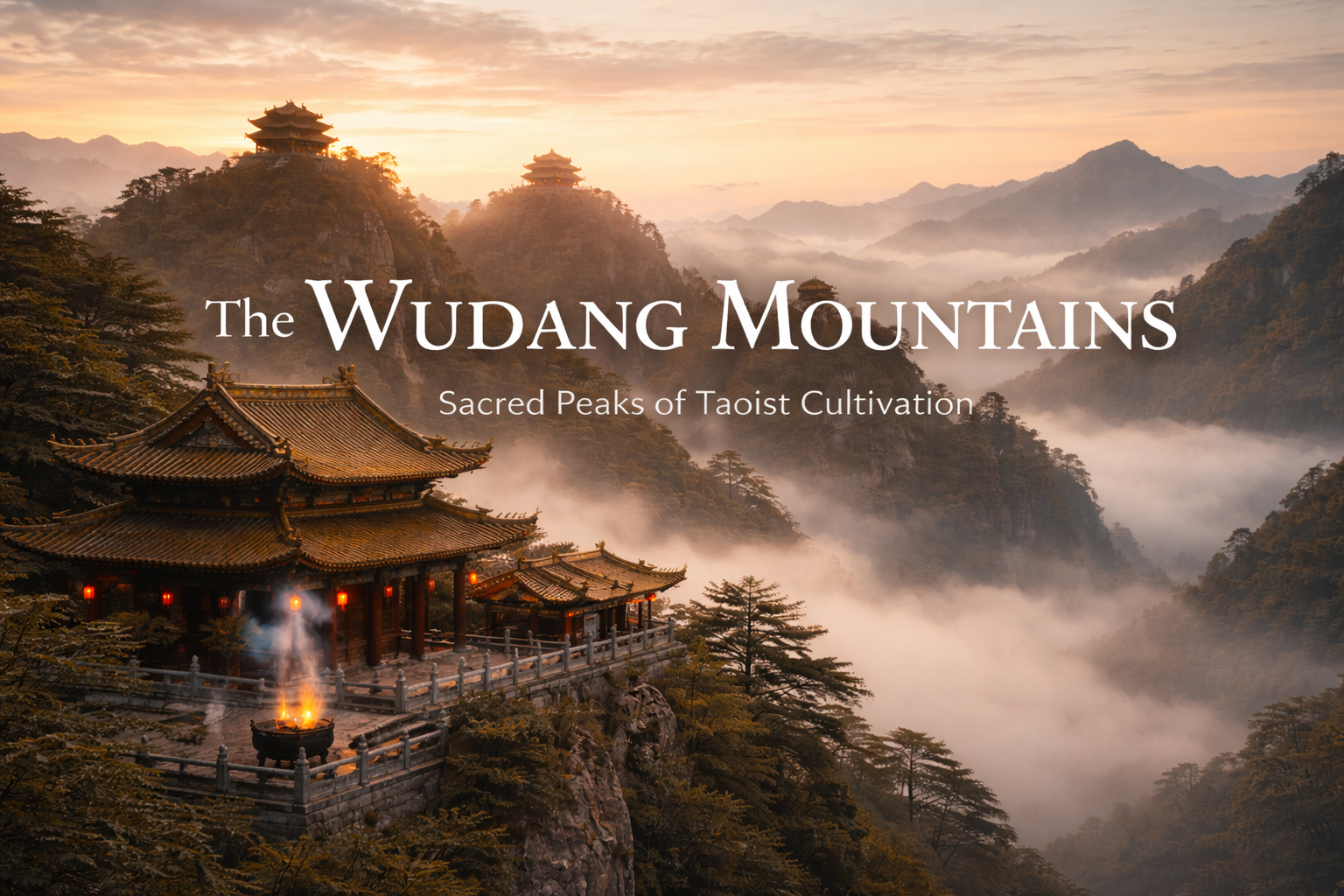
The Wudang Mountains
Sacred Peaks of Taoist Cultivation
High in the mountains of Hubei province, the Wudang range rises through layers of mist and forest like a natural temple. For centuries Taoist practitioners have climbed its steep stone paths seeking solitude, discipline, and alignment with the deeper rhythms of nature. The mountains are not merely a dramatic landscape—they are a sacred geography where philosophy, architecture, and daily practice converge.
The temple complexes of Wudang appear to grow out of the cliffs themselves. Pavilions balance along narrow ridges, stone stairways wind through ancient forests, and incense smoke drifts across quiet courtyards. Many of the buildings date back to the Ming Dynasty, when the imperial court sponsored the construction of temples dedicated to the Taoist deity Zhenwu, the Perfected Warrior.
Yet Wudang is not simply a historical monument. It remains a place of cultivation. Taoist priests and practitioners continue to study meditation, ritual practice, and internal martial arts within the mountain temples. At sunrise, the peaks fill with the slow movements of practitioners training in Taijiquan and other internal arts that were shaped by the mountain’s philosophical traditions.
To walk the paths of Wudang is to encounter a living expression of Taoism. The mountains reflect the central Taoist insight that harmony emerges from alignment with the natural world. Stone, water, mist, and wind all become part of the practice. The temples, perched between earth and sky, remind visitors that spiritual cultivation often begins by simply stepping away from the noise of the world and listening to the quiet rhythms of the landscape.