The Taoist Kitchen
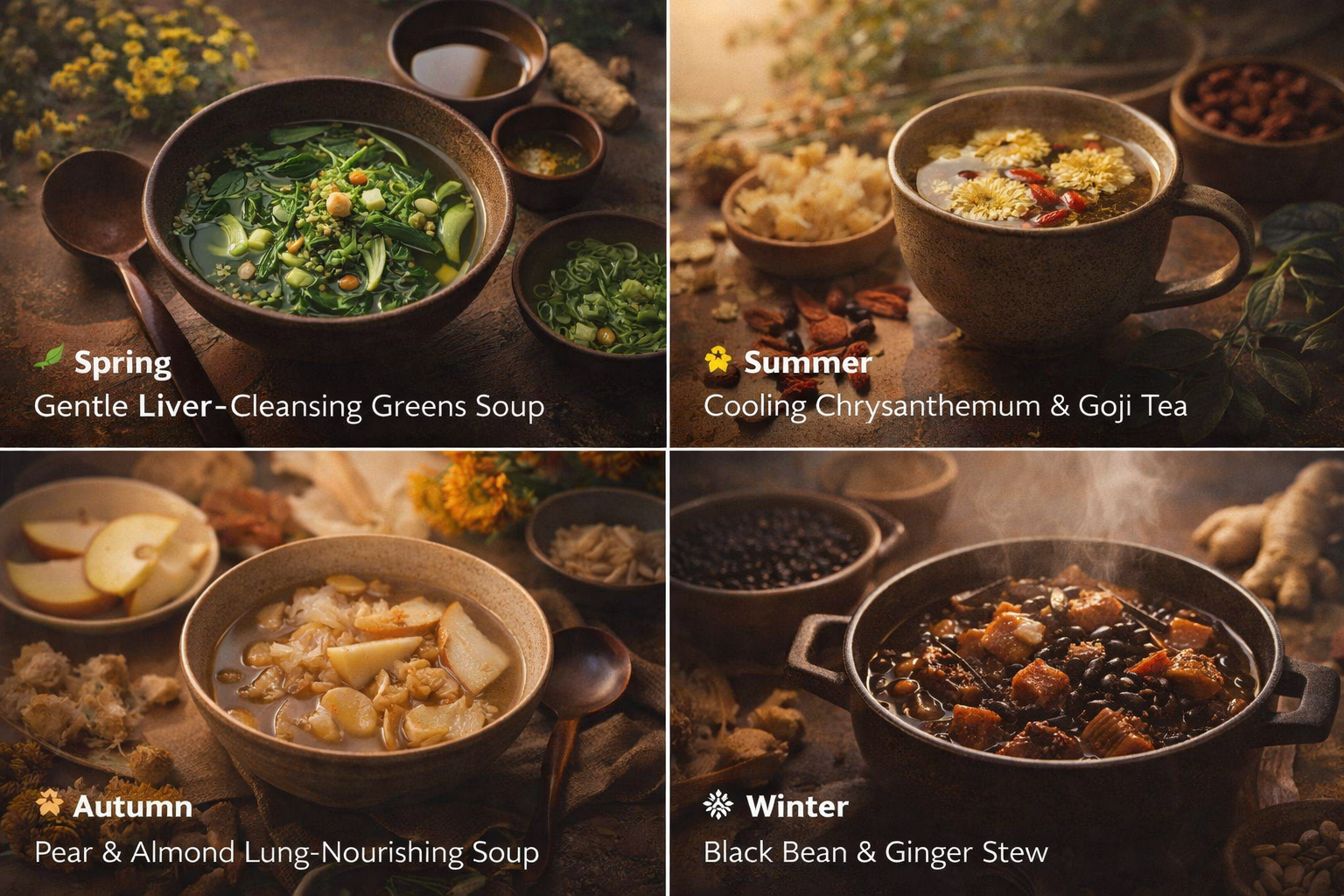
Cooking in Harmony With the Seasons
In Taoism, food is not separate from philosophy. It is not merely sustenance, nor indulgence. It is alignment.
To eat well is to eat in season.
To cook wisely is to respond to climate.
To nourish the body is to maintain harmony between internal energy and the rhythms of heaven and earth.
Across Beijing, Taipei, and Singapore, Taoist-influenced food traditions quietly persist—not as rigid doctrine, but as practical wisdom shaped by centuries of observation.
Food as Cosmology

The Atlas Project →
Taoist thought is built upon balance—yin and yang, the five elements, the movement of qi. These principles extend naturally into cooking.

Ingredients are not simply flavors; they carry energetic properties:

• Warming or cooling
• Moistening or drying
• Rising or descending
• Expanding or contracting

In winter, warming broths strengthen internal energy.
In summer, cooling herbs reduce excess heat.
In damp climates, aromatic spices move stagnant qi.

The kitchen becomes a place of subtle correction.
Spring: Renewal and Lightness

The Echo Project →
Spring in Taoist philosophy corresponds to the Wood element and the liver—associated with growth and movement.

Seasonal emphasis:
• Fresh greens
• Light soups
• Sprouted vegetables
• Gentle sour flavors

In Taipei’s markets, spring greens appear in abundance. In Beijing, herbal teas support liver energy after winter heaviness. The focus shifts from preservation to renewal.

Food becomes upward-moving—encouraging circulation after months of contraction.
Summer: Cooling and Expansion

The Brightline Project →
Summer aligns with the Fire element and the heart.

Seasonal emphasis:
• Cooling teas (chrysanthemum, mint)
• Light porridges
• Water-rich fruits
• Bitter greens

In Singapore’s humid climate, Taoist-informed diets often emphasize balance against heat—avoiding excessive fried foods, incorporating herbal drinks, and favoring lighter evening meals.

The goal is not restriction, but moderation. Too much internal heat disrupts clarity and calm.
Autumn: Reflection and Moisture
The Brightline Project →
Autumn corresponds with Metal and the lungs.

Seasonal emphasis:
• Pears and white fruits
• Root vegetables
• Gentle stews
• Mild spices

In Beijing, roasted chestnuts fill the streets. In Taiwan, soups become slightly richer but not heavy. The focus is moisture retention as air grows dry.

Food becomes inward-turning—preparing the body for winter stillness.
Winter: Strength and Depth
The Brightline Project →
Winter aligns with Water and the kidneys—associated with foundational energy.

Seasonal emphasis:
• Long-simmered broths
• Black beans
• Sea vegetables
• Ginger and warming spices

This is the season of consolidation. Meals are slower. Soups deepen. Nourishment is concentrated.

Across northern China especially, winter cooking reflects endurance and protection against cold.
The Tao of Moderation
Perhaps the most consistent Taoist principle in cooking is moderation.
Excess—of heat, cold, spice, sugar, alcohol—is seen as imbalance. The ideal meal is varied, colorful, seasonal, and simple.
Food is rarely extreme. It supports longevity rather than indulgence.
Seasonal Living Beyond the Plate
The Brightline Project →
Taoist seasonal wisdom extends past food.

Spring:
• Clean and reorganize space
• Begin new projects
• Increase movement

Summer:
• Socialize
• Wake earlier
• Protect from overexertion

Autumn:
• Reflect
• Reduce excess
• Prepare gradually

Winter:
• Rest more
• Preserve energy
• Focus inward

Cooking becomes one expression of a larger rhythm.
Urban Application
In cities like Taipei and Singapore, traditional seasonal awareness adapts to modern markets and imported foods. Yet many families still adjust diets subtly based on weather shifts.
Herbal shops remain active. Seasonal soups appear on menus. Grandparents pass down quiet kitchen rules rooted in Taoist cosmology—even if they are not labeled as such.
This is not strict doctrine.
It is inherited intuition