
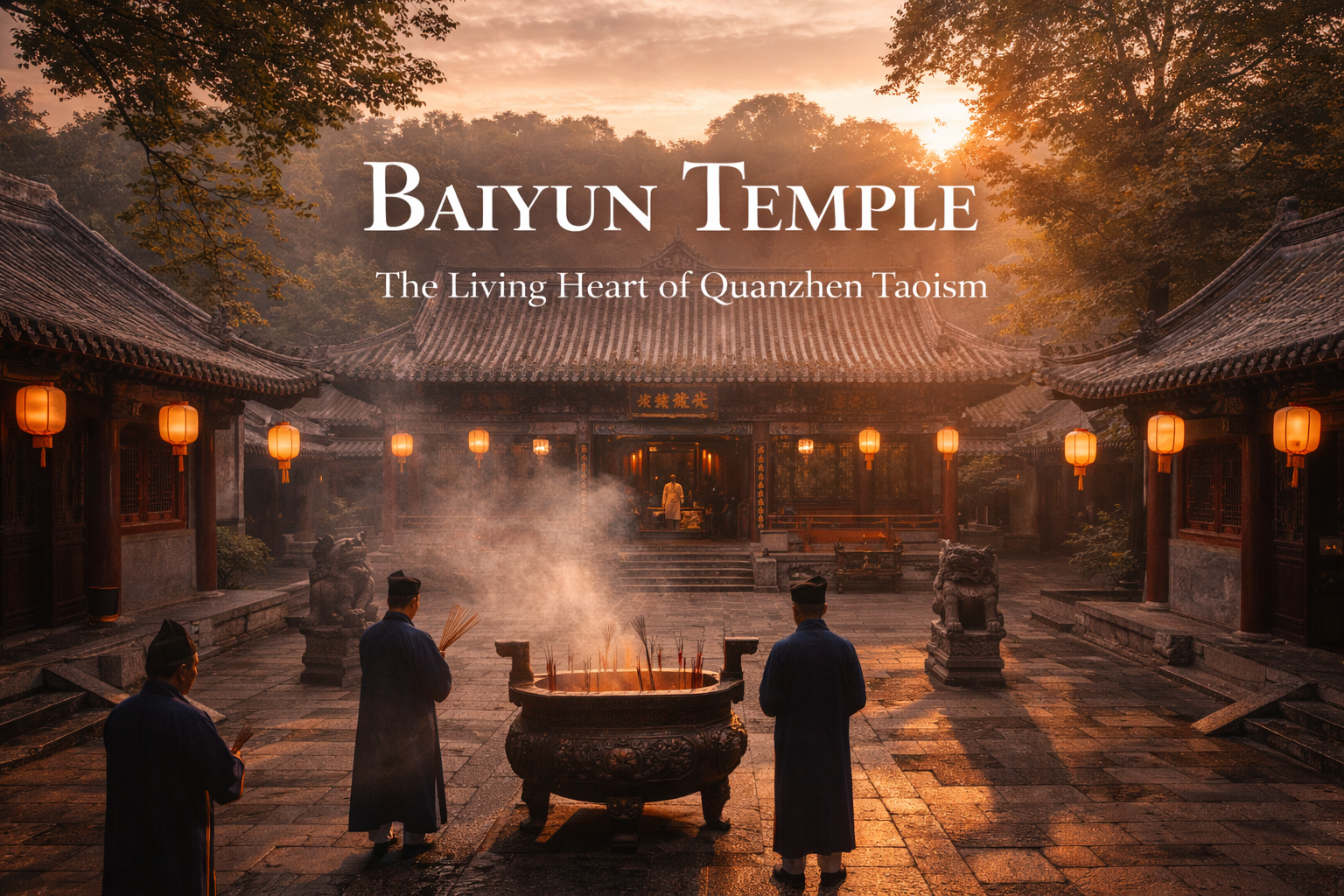
Baiyun Temple (Beijing)
The Living Heart of Quanzhen Taoism
In the western districts of Beijing, beyond the dense streets and modern towers of the capital, stands Baiyun Temple, known in English as the White Cloud Temple. For centuries it has served as one of the most important centers of Taoist religious life in northern China.
Originally established during the Tang dynasty and later expanded during the Yuan and Ming periods, Baiyun Temple became the headquarters of the Quanzhen school of Taoism, one of the most influential monastic traditions within the religion. Unlike the hermit culture of sacred mountains, Quanzhen Taoism emphasized organized monastic practice, disciplined training, and a structured religious community.
Walking through the gates of Baiyun Temple, visitors enter a quiet world of courtyards, incense burners, and prayer halls. Red lanterns hang beneath carved wooden roofs, and the scent of incense drifts through the temple complex as worshippers light offerings and bow before the altars.
The temple is not only a historical site but also an active religious institution. Taoist priests continue to study classical texts, conduct rituals, and maintain daily temple life within its walls. Festivals throughout the year draw both pilgrims and curious visitors who come to experience one of the oldest surviving Taoist monasteries in the capital.
Baiyun Temple represents an important shift in the story of Taoism. While the sacred mountains symbolize spiritual retreat and mystical cultivation, temples like Baiyun show how Taoism became embedded in the social and religious life of cities.
Here the teachings of the Tao are not hidden in distant mountains but practiced openly within the rhythms of everyday urban life