
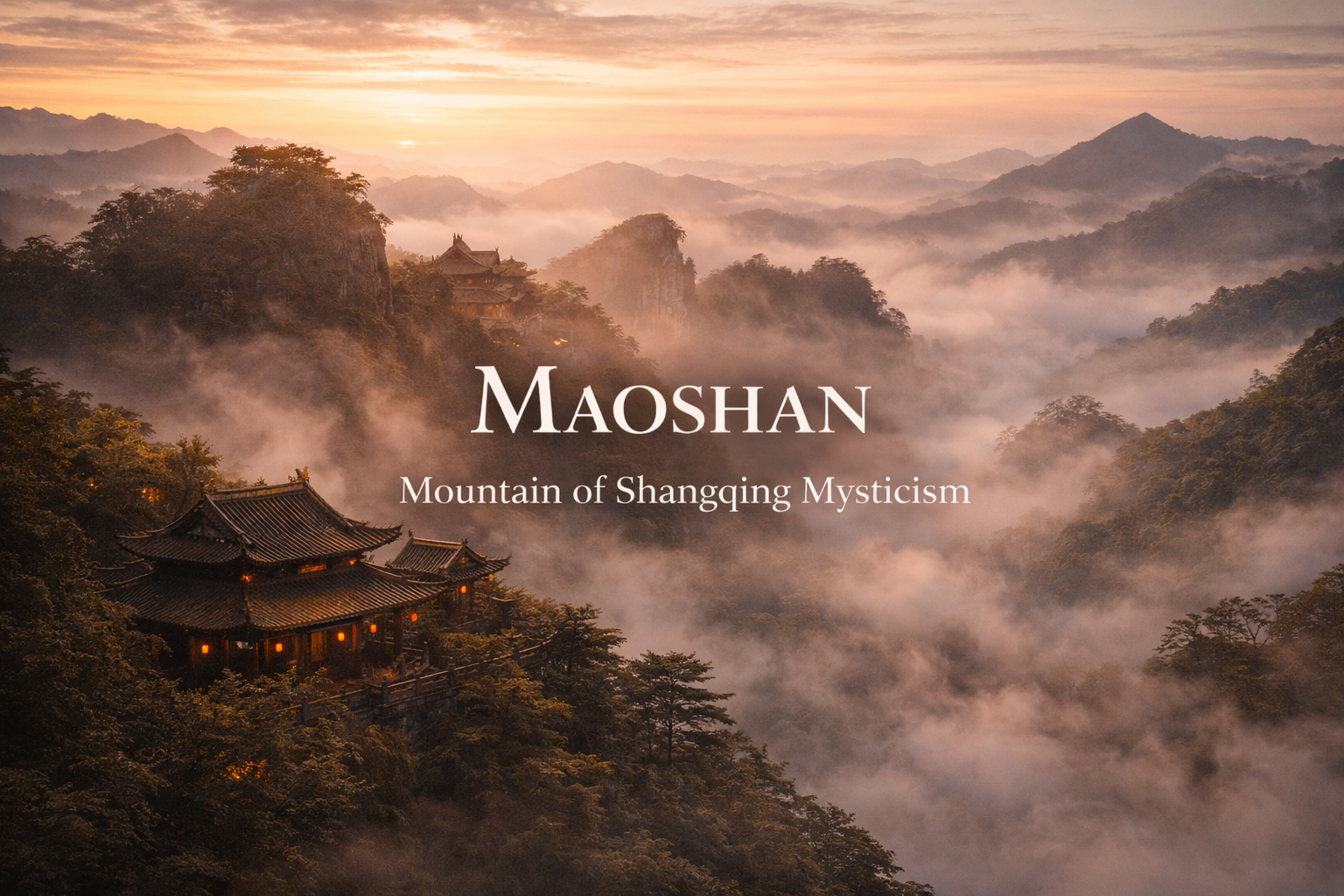
Maoshan
Mountain of Shangqing Mysticism
Rising gently from the plains of Jiangsu province, Maoshan has long been revered as one of the most mystical landscapes in Taoist tradition. Unlike the dramatic cliffs of Wudang or the river valleys of Longhu Mountain, Maoshan is known for its quiet peaks, forested ridges, and secluded temples that appear almost hidden within the mist.
The mountain is most closely associated with the Shangqing tradition, one of the major schools of Taoism that developed during the fourth century. Shangqing, meaning “Highest Clarity,” emphasized visionary meditation, sacred revelations, and spiritual transformation through inner cultivation. Many of the scriptures that shaped this tradition were said to have been revealed to practitioners who lived and meditated in the caves and mountains surrounding Maoshan.
For centuries the slopes of Maoshan were home to hermits, scholars, and Taoist practitioners who sought solitude for spiritual practice. Meditation caves carved into the hillsides became places where practitioners pursued quiet contemplation and mystical insight. These retreats helped establish Maoshan as a center for esoteric Taoist study and spiritual experimentation.
Temples were gradually constructed along the mountain paths, forming a network of shrines and monasteries that supported both hermits and visiting pilgrims. Lantern-lit halls, incense-filled courtyards, and stone stairways winding through pine forests created an atmosphere that felt both contemplative and otherworldly.
Throughout Chinese history Maoshan was regarded as a place where the boundaries between the visible world and the spiritual realm seemed unusually thin. Taoist texts often describe the mountain as a gateway to higher spiritual understanding, where disciplined practice could lead to insight into the deeper patterns of the cosmos.
Today the temples of Maoshan continue to welcome visitors and practitioners drawn to its reputation as a mountain of mysticism and quiet cultivation. The gentle ridges and mist-filled forests preserve an atmosphere of reflection that has shaped Taoist spiritual life for more than fifteen centuries.