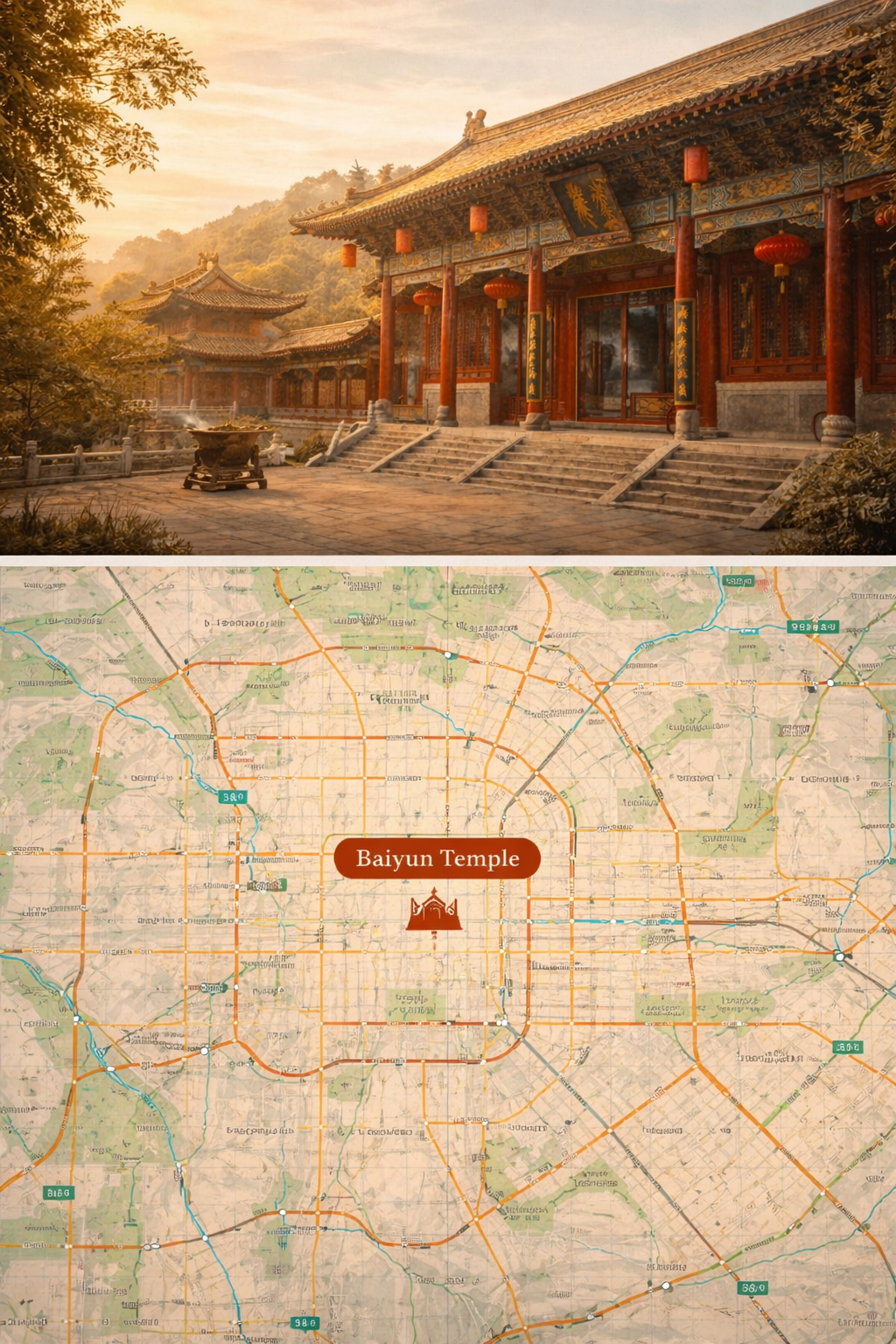
Baiyun Temple
Founded during the Tang dynasty and rebuilt in the Yuan and Ming periods, Baiyun Temple—known as the White Cloud Temple—is one of the most important centers of Quanzhen (Complete Perfection) Taoism in China. Located in Beijing, it has long served as a spiritual, educational, and administrative hub for Taoist practice. Its red-pillared halls, carved beams, and quiet courtyards reflect both imperial architectural influence and monastic simplicity. Unlike remote mountain temples, Baiyun remains deeply connected to daily urban life, hosting seasonal festivals, ritual ceremonies, and active religious study, making it a living embodiment of Taoist tradition in the modern world.
Beyond its architectural beauty, Baiyun Temple represents continuity. Monastics and lay practitioners gather here for daily liturgies, meditation, scriptural study, and the observance of the lunar calendar’s sacred dates. During major festivals, the temple fills with incense, prayer offerings, and families seeking blessings for health, harmony, and prosperity. In this way, Baiyun is not merely a historical monument—it is a living space where ancient teachings continue to shape contemporary life, bridging centuries of Taoist philosophy with the rhythms of modern Beijing.